
Bitspec
Day 7 From Certification to Trust: The Missing Layer of Verification
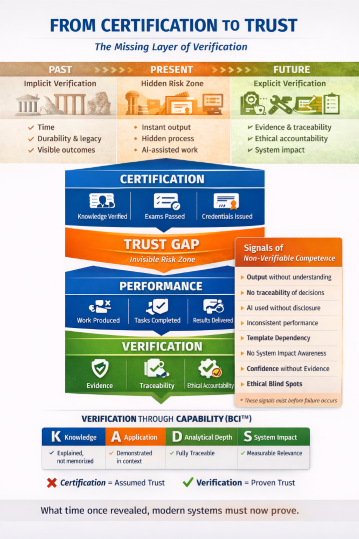
Fig. 1- generated with ChatGPT ver.5.3 instant
Abstract
Certification has become the dominant signal of competence. It is also insufficient.
In complex, AI-mediated systems, knowledge can be simulated, outputs can be generated, and performance can be imitated—without underlying capability.
This creates a structural problem: trust is assumed where it cannot be verified.
This article establishes a critical distinction: certification validates exposure; verification validates capability. It introduces verification as the missing layer in professional systems and positions capability as a measurable, evidence-based construct.
1. Certification Is Not Trust
Certification confirms that a person has met predefined criteria.
It does not confirm that the person can perform under real conditions.
The modern certification model is built on:
- Examination
- Completion
- Standardization
None of these guarantees:
- Transferability
- Accountability
- Integrity under complexity
Certification produces confidence.
It does not produce trust.
2. When Time Was the Verifier
Before certification systems, capability was not declared—it was revealed.
In architecture, engineering, and art, the result of work persisted beyond its creator.
Structures stood or collapsed.
Systems functioned or failed.
Art endured or disappeared.
There was no external validation layer.
Time performed the verification.
Time exposed:
- Weak design
- Poor understanding
- Lack of responsibility
And it preserved:
- Precision
- mastery
- integrity
Verification was not immediate. But it was absolute.
3. The Loss of Temporal Verification
Modern systems have eliminated time as a reliable validator.
- Outputs are instantaneous
- Work is digital
- Systems are opaque
- AI can generate results without understanding
Failure no longer appears gradually. It is either delayed or completely hidden.
This creates a fundamental shift: Capability is no longer revealed by time. It must be established by design.
4. The Trust Gap
Between certification and real-world performance lies an unmeasured space:
The trust gap exists when:
- Output is present, but reasoning is absent
- Results exist, but the process is invisible
- Decisions are made, but accountability is unclear
The gap is not theoretical. It is operational.
Organizations experience it as:
- inconsistent performance
- unexplainable outcomes
- systemic failure under stress
5. AI as an Amplifier
Artificial intelligence does not create the trust gap.
It scales it.
AI enables:
- rapid output generation
- high-quality language and analysis
- replication of expert patterns
But it does not guarantee:
- understanding
- responsibility
- ethical judgment
AI separates output from capability. This makes verification no longer optional. It becomes foundational.
6. Verification as a System Requirement
Professional systems currently operate on two layers:
- Knowledge
- Application
Both are insufficient without a third layer:
Verification
Verification requires:
- evidence of process
- traceability of decisions
- transparency of tools
- accountability for outcomes
Without verification, performance remains unproven.
7. Detectable Absence of Verification
Non-verifiable capability is not hidden. It produces patterns:
- Explanation cannot follow the output
- Performance collapses outside templates
- Reasoning cannot be reconstructed
- Tools are used but not disclosed
- The impact is not understood
- Confidence exceeds evidence
These are not learning gaps. They are verification failures.
8. Capability as a Verifiable Structure (BCI™)
Capability must be defined in terms that can be tested, observed, and verified.
The BITSPEC Capability Index (BCI™) defines five necessary conditions:
- Knowledge
- Application
- Analytical Depth
- System Impact
- Ethical Judgment
Capability is not additive. It is multiplicative.
If one dimension fails, the system fails.
Capability exists only when all dimensions are present and verifiable.
9. From Credentialing to Verification
The transition is structural:
Certification |
Verification |
|
Assumed competence |
Demonstrated capability |
|
Static validation |
Continuous evidence |
|
Knowledge-based |
Multi-dimensional |
|
No traceability |
Full traceability |
This is not an improvement.
It is a replacement model.
10. The New Standard
Future professional systems will not rely on claims.
They will require:
- evidence
- transparency
- traceability
- ethical accountability
Trust will no longer be granted. It will be constructed.
Conclusion
The problem is not the absence of certification. It is the absence of verification.
In the past, time revealed the truth of human capability. Today, that responsibility belongs to system design.
What time once revealed, modern systems must now prove.
An article blog written with ChatGPT version. 5.3 support April 6, 2026
When you subscribe to the blog, we will send you an e-mail when there are new updates on the site so you wouldn't miss them.
