
Bitspec
Day 14: When Access to Tools and Software Is Incomplete
Why Devices Alone Do Not Create Capability?
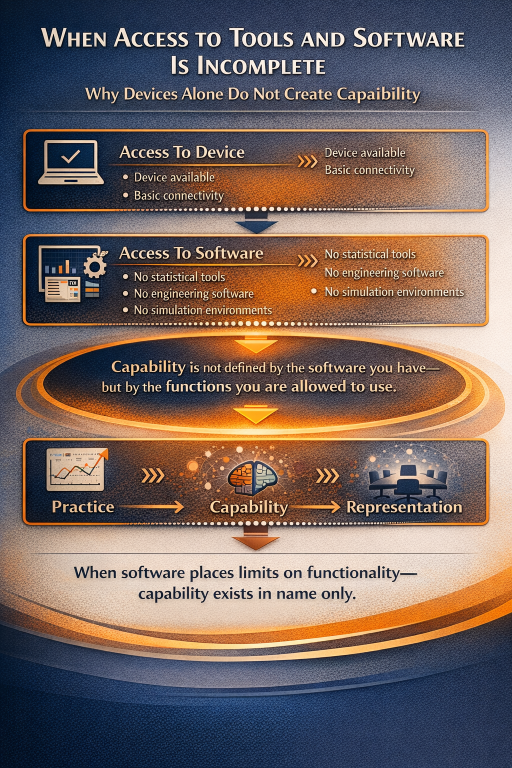
Fig. 1 Generated with ChatGPT version 5.3
There is a common belief in modern education that once access is provided, the problem is solved.
A learner receives a computer.
An institution provides internet.
A platform is made available.
And the conclusion is simple:
Access has been achieved.
But this conclusion is incomplete.
Because access to a device is not the same as access to capability.
-
The First Layer: Devices
Providing a computer creates participation.
A learner can:
- Log in to a course
- Read materials
- Watch lectures
- Submit assignments
This matters.
But it represents only the surface of access.
It allows presence.
It does not ensure development.
-
The Second Layer: Software
Capability begins to form when tools are introduced.
Software enables:
- Data analysis
- System modeling
- Experimentation
- Visualization
Without software:
- Theory cannot be tested
- Systems cannot be explored
- Learning remains abstract
At this stage, access moves from presence to potential.
But potential alone is not enough.
-
The Hidden Layer: Functionality
Even when software is available, access is not always complete.
Not all users have access to the same functions.
Some are limited to:
- Basic interfaces
- Predefined outputs
- Restricted features
While others can:
- Build models
- Run advanced analyses
- Design experiments
- Explore systems in depth
This creates a new divide.
Not between those who have software and those who do not.
But between those who can use it fully and those who cannot.
Access to software does not guarantee capability.
Capability depends on access to functionality.
-
Practice Defines Learning
In technical fields such as:
- Engineering
- Data analysis
- Lean Six Sigma
- Design of Experiments
Learning is not passive.
It is built through:
- Experimentation
- Iteration
- Direct interaction with systems
Without full functional access:
- Practice becomes limited
- Exploration becomes constrained
- Understanding remains partial
A learner may appear prepared.
But capability is not fully formed.
-
BCI™ Perspective: Capability Requires Enablement
Within the BITSPEC Capability Index (BCI™):
- Knowledge (K) can be developed through content
- But Application (A) requires tools
- Analytical Depth (D) requires exploration
- System Impact (S) requires interaction with real systems
- Ethical Judgment (E) requires context and consequence
Without access to full functionality, these dimensions cannot fully converge.
Capability is not only learned.
It is enabled through conditions.
-
The Structural Outcome
Over time, incomplete access leads to:
- Uneven capability development
- Reduced confidence in applying knowledge
- Limited participation in advanced environments
- Lower representation in technical and decision-making roles
This is not always visible at the beginning.
But it becomes visible in who contributes, who advances, and who is trusted with responsibility.
-
UNESCO MIL Alignment: Meaningful Participation
The UNESCO Media and Information Literacy framework emphasizes:
- Inclusion
- Participation
- Empowerment through technology
Participation is not simply being present in a system.
It is the ability to engage meaningfully.
And meaningful engagement requires:
- Access to tools
- Access to functionality
- Access to real practice
-
The Responsibility of Systems
Educational institutions and organizations often focus on providing access at scale.
But an important question remains:
- What level of access is being provided?
- What level of capability is being enabled?
Because systems do not shape outcomes only by what they include.
They are also shaped by what they limit.
-
From Access to Capability
The progression is only complete when all layers are present:
- Access to devices → creates participation
- Access to software → creates potential
- Access to functionality → enables practice
- Practice → builds capability
- Capability → enables contribution
- Verification → creates trust
If one layer is constrained, the outcome is constrained.
-
Final Reflection
A learner with a device can participate.
A learner with software can begin to explore.
But only a learner with full functional access can develop capability.
-
Closing Statement (BITSPEC Positioning)
Access creates participation.
Education creates understanding.
Capability creates performance.
Verification creates trust.
But capability is not defined by the tools we have.
It is defined by what we are allowed to do with them.
When software limits functionality, capability exists only in name.
An article blog written with ChatGPT version. 5.3 support April 16, 2026
When you subscribe to the blog, we will send you an e-mail when there are new updates on the site so you wouldn't miss them.
