
Bitspec
Day 10 The Illusion of Intelligence: Why AI Does Not Guarantee Capability
From Artificial Intelligence to Verified Capability (Education 6.0 Perspective)
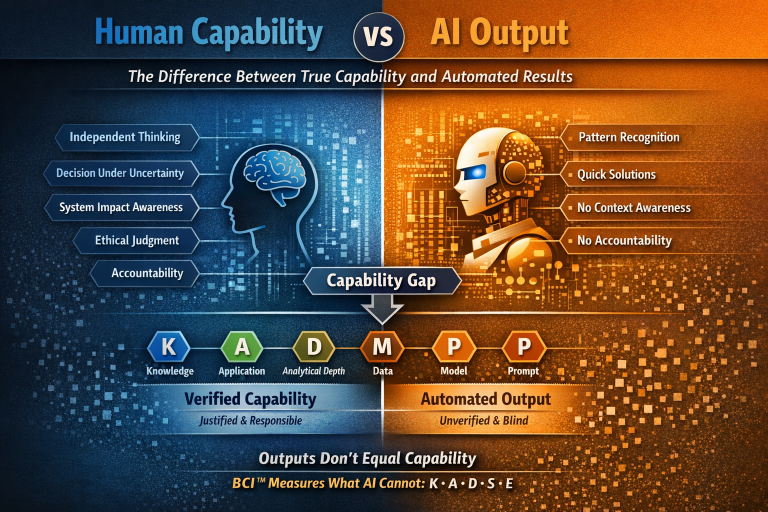
Fig. 1 Generated with ChatGPT version 5.3
Abstract
Artificial Intelligence is rapidly transforming education, certification, and professional practice. However, its increasing presence introduces a critical misconception: that access to AI equates to competence. This article examines the structural gap between AI-generated outputs and human capability, arguing that intelligence without verification creates systemic risk. Within the Education 6.0 framework, AI is positioned not as a substitute for competence but as a multiplier—one that must be governed, measured, and verified through the BITSPEC Capability Index (BCI™).
1. The Rise of AI – A False Signal of Competence
AI tools today can:
-
Generate reports, analyses, and code
-
Solve statistical problems instantly
-
Draft policies, frameworks, and strategies
-
Simulate expert-level reasoning
At first glance, this creates the appearance of capability.
But appearance is not capability.
AI produces outputs. Capability requires ownership, judgment, and accountability.
A student using AI can submit a perfect assignment. A professional using AI can produce a flawless report.
Yet neither guarantees:
-
Understanding
-
Transferability of knowledge
-
Ethical decision-making
-
System impact awareness
This is the Illusion of Intelligence.
2. AI as a Function, Not a Capability
At its core, AI behaves as a function:
Output = f(Data, Model, Prompt)
This means:
-
AI depends entirely on input quality
-
It operates within probabilistic boundaries
-
It has no intrinsic responsibility
In contrast, human capability includes far more than output generation.
3. What Is Human Capability? (Education 6.0 Definition)
Human capability is not knowledge, nor performance alone.
Human capability is the sustained ability to make justified, responsible, and effective decisions under real-world conditions.
It is demonstrated when an individual can:
1. Think Independently
-
Interpret context beyond given data
-
Challenge assumptions (including AI outputs)
-
Form original reasoning
2. Act Under Uncertainty
-
Make decisions with incomplete or imperfect information
-
Accept and manage risk
-
Move forward without full certainty
3. Sustain Performance Under Pressure
-
Maintain quality of thinking in complex situations
-
Avoid collapse when the stakes are high
-
Remain consistent over time
4. Understand System Impact
-
Recognize downstream consequences
-
Evaluate financial, operational, and societal effects
-
Connect decisions to broader systems
5. Exercise Ethical Judgment
-
Make responsible decisions when trade-offs exist
-
Identify bias, misuse, or unintended harm
-
Act with integrity even when not enforced
6. Own Decisions and Outcomes
-
Take responsibility for results
-
Justify decisions clearly
-
Remain accountable when outcomes fail
Critical Insight
Capability is not what a person can produce once. It is what they can consistently justify, sustain, and take responsibility for.
4. The Hidden Risk: Delegated Thinking
The most dangerous shift is not AI itself; it is unverified delegation of thinking. When individuals rely on AI without verification:
-
Errors are amplified, not reduced
-
Bias is embedded invisibly
-
Decisions lose traceability
-
Accountability becomes unclear
This leads to:
High-quality outputs with low-quality understanding
5. Why Traditional Certification Fails in the AI Era
Traditional systems assume:
-
Work submitted = work understood
-
Correct answers = competence
-
Completion = readiness
AI breaks all three.
Certification verifies outcomes, not capability.
A candidate can pass exams, complete assignments, and obtain certification without demonstrating:
-
Independent thinking
-
System awareness
-
Ethical responsibility
-
Sustained performance
6. How Capability Is Verified Today – And Why It Fails
Current Methods
-
Academic credentials
-
Professional certifications
-
Work experience
-
Portfolio evidence
The Core Assumption
If outputs are correct, capability exists.
This assumption no longer holds.
The Verification Gap
Traditional systems validate:
What was produced
But fail to validate:
-
How it was produced
-
Why were decisions made
-
What risks were considered
-
What impact was evaluated
-
Who is accountable
This results in:
Verification without traceability
7. The Collapse of Trust Signals
Degrees, certifications, and experience once acted as reliable signals.
Today:
-
AI equalizes output quality
-
Capability becomes indistinguishable
-
Weak performers can appear strong
This is signal dilution.
8. What True Verification Requires
To verify human capability, systems must assess:
Decision Traceability
Can the individual explain their reasoning?
Analytical Integrity
Are conclusions logically derived?
System Awareness
Are consequences understood?
Ethical Justification
Are decisions responsible?
Independence of Thought
Can AI outputs be challenged?
9. The Role of BCI™ in an AI-Augmented World
The BITSPEC Capability Index (BCI™) provides a structured verification model:
BCI = (K × A × D × S × E)^(1/5)
Where:
-
K – Knowledge
-
A – Application
-
D – Analytical Depth
-
S – System Impact
-
E – Ethical Judgment
Key Insight
AI can support:
-
Knowledge access
-
Execution assistance
-
Analytical suggestions
But it cannot guarantee:
-
Real-world consequences (S)
-
Ethical responsibility (E)
-
Accountability
10. AI + Human = Augmented Capability (Only If Verified)
AI should not replace capability; it should expose it.
A capable individual must demonstrate:
-
How AI was used
-
Why were decisions made
-
What risks were identified
-
What impact is expected
-
What ethical considerations were evaluated
11. The New Competency: AI Governance
A new foundational capability emerges:
AI Governance
-
Prompt awareness
-
Output validation
-
Bias detection
-
Decision traceability
-
Ethical boundaries
12. From Intelligence to Accountability
AI can generate answers.
But only humans can:
-
Take responsibility
-
Accept consequences
-
Make ethical decisions
Capability is defined by accountability not intelligence.
13. The Future of Verification Systems
Future systems must be:
-
Evidence-based
-
Process-aware
-
AI-transparent
-
Continuously validated
Capability must be demonstrated, not declared
14. Conclusion: The Future is Not AI – It is Verified Capability
AI is not the endpoint; it is the amplifier.
The real question is not:
“Can AI do this?”
But:
Can the human behind AI justify, validate, and own the outcome?
Education 6.0 answers this by shifting from:
-
Intelligence → Capability
-
Output → Evidence
-
Certification → Verification
Final Statement
AI can generate answers. Only human capability can justify them.
An article blog written with ChatGPT version. 5.3 support April 10, 2026
When you subscribe to the blog, we will send you an e-mail when there are new updates on the site so you wouldn't miss them.
