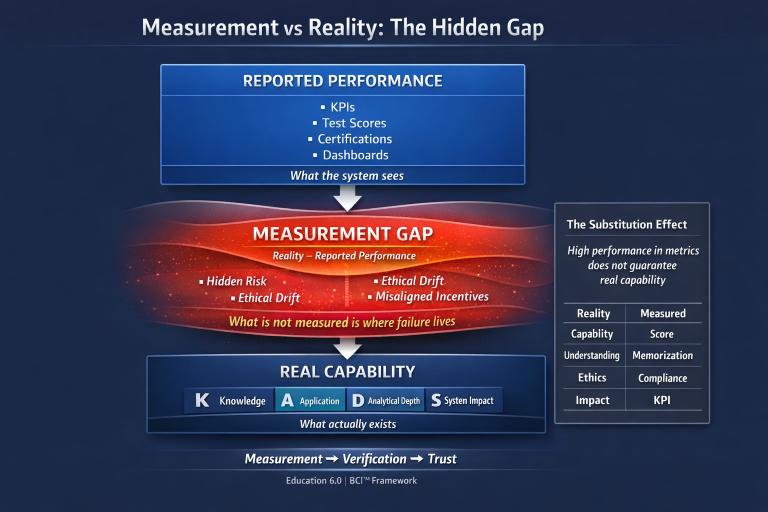
Fig. 1 Generated with ChatGPT ver.5.3 instant
1. Introduction
Modern systems are built on measurement.
We measure performance, learning, productivity, quality, risk, and compliance. We design dashboards, define KPIs, administer exams, and issue certifications—all in the pursuit of control, improvement, and assurance.
Measurement gives us comfort.
It creates the impression that what we observe is what truly exists.
But this assumption is flawed.
What gets measured is not always what exists.
And what exists is not always what gets measured.
This is the illusion of measurement—and it is one of the most dangerous weaknesses in modern professional, educational, and organizational systems.
2. The Measurement Comfort Trap
Measurement creates psychological stability.
A score, a metric, or a certification suggests:
- Objectivity
- Control
- Validity
- Completion
Organizations rely on these signals to make decisions. Individuals rely on them to define competence. Institutions rely on them to claim credibility.
But measurement does not guarantee truth.
It only reflects what has been chosen to be measured.
And what is chosen is often driven by:
- Convenience
- Standardization
- Cost
- Visibility
Not by reality.
3. The Substitution Effect
Over time, a subtle shift occurs.
Measurement stops being a representation of reality and becomes a substitute for it.
Reality |
What is Measured |
|
Capability |
Test scores |
|
Understanding |
Memorization |
|
Ethical judgment |
Compliance checklists |
|
System impact |
Short-term KPIs |
This substitution creates a dangerous illusion:
If it is measured, it must be true.
But what is measured is often only a fragment of the whole.
And fragments, when mistaken for completeness, become distorted.
4. Why Measurement Fails
Measurement systems fail not because they are incorrect, but because they are incomplete.
Three fundamental forces drive this failure:
1. Human Optimization
People optimize for what is rewarded.
If success is defined by passing a test, individuals will learn how to pass the test, not necessarily how to perform in reality.
2. System Visibility Bias
Organizations prioritize what can be easily measured.
Complex elements such as:
- Ethical reasoning
- System thinking
- Long-term impact
They are often excluded because they are difficult to quantify.
3. Reduction of Complexity
Reality is multi-dimensional. Measurement simplifies it.
But simplification removes:
- Context
- Interdependencies
- Consequences
What remains is a controlled but incomplete representation of performance.
5. The Measurement Gap
Between reality and reported performance lies an invisible space:
Measurement Gap = Reality – Reported Performance
This gap is where:
- Risks accumulate
- Ethical drift begins
- Poor decisions are justified
- System failures are born
It is not the visible metrics that create failure—it is what remains unseen.
Organizations rarely collapse because of what they measure.
They collapse because of what they ignore.
From Measurement to Capability: The BCI™ Perspective
Traditional systems focus heavily on knowledge.
They measure:
- What a person knows
- What a person can recall
But professional capability is far more complex.
The BITSPEC Capability Index (BCI™) introduces a multi-dimensional model:
- K — Knowledge
- A — Application
- D — Analytical Depth
- S — System Impact
- E — Ethical Judgment
The capability is defined as:
BCI = (K × A × D × S × E)^(1/5)
This formulation introduces a critical principle:
Capability is not additive—it is multiplicative.
A high score in one dimension cannot compensate for failure in another.
A professional with strong knowledge but weak ethical judgment or system awareness does not represent partial competence.
They represent systemic risk.
6. The Art Perspective: Proof Through Time
Before modern measurement systems, capability was not validated through scores.
It was validated through creation.
- Cathedrals stood for centuries
- Engineering structures endured generations
- Works of art carried meaning across time
These outputs were not certified.
They were verified through durability, impact, and continuity.
The work itself became the proof.
In contrast, modern systems often certify before reality has the opportunity to validate.
This reversal creates a disconnect between recognition and truth.
7. The Critical Shift: From Measuring to Verifying
Measurement alone is insufficient.
Verification must follow.
Measurement answers:
- What was achieved within controlled conditions
Verification answers:
- What performs under real conditions
Measurement is static.
Verification is dynamic.
Measurement observes.
Verification proves.
This is the missing layer between certification and trust.
8. Implications for Modern Systems
The illusion of measurement has far-reaching consequences:
- Education systems produce graduates who pass exams but struggle in practice
- Organizations optimize KPIs while losing long-term capability
- Certifications signal competence without proving performance
- Ethical failures emerge in areas that were never measured
Without addressing the measurement gap, systems continue to operate under false confidence.
9. Conclusion
Measurement is necessary—but it is not sufficient.
When metrics replace reality, systems become vulnerable not because they lack data, but because they misunderstand it.
The true challenge is not to measure more.
It is to measure what matters—and verify what cannot be measured.
The greatest risk is not that we fail to measure.
It is that we measure the wrong thing—and believe it is the truth.
BITSPEC Education 6.0 Position
Education 6.0 moves beyond measurement.
It establishes:
- Capability over completion
- Verification over certification
- Systems thinking over isolated metrics
Through the BCI™ model, capability becomes:
- Observable
- Measurable across dimensions
- Verifiable in context
Because in the end:
Trust is not built on what is measured.
It is built on what is proven.
An article blog written with ChatGPT version. 5.3 support April 8, 2026