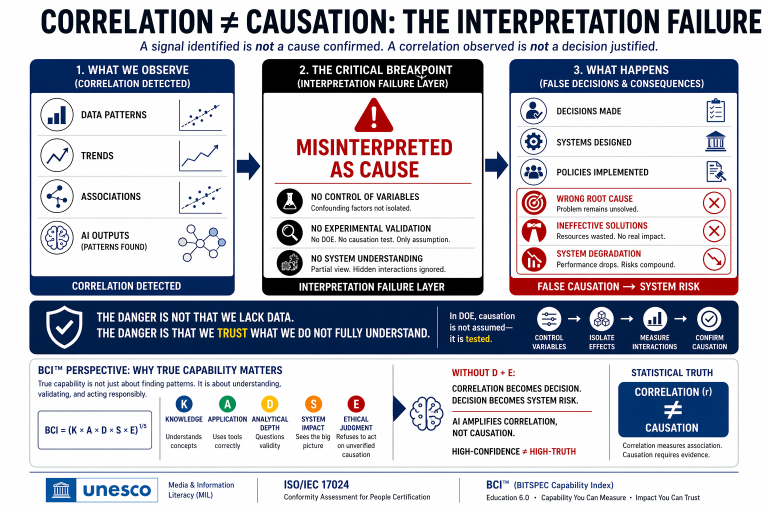
Fig. 1 Generated with ChatGPT version 5.3
-
Introduction: The Illusion of Understanding
We live in a world rich in data.
Patterns are everywhere:
- Trends appear consistent
- Relationships seem obvious
- AI produces confident outputs
Yet one of the most critical errors in decision-making persists: we confuse correlation with causation.
This is not a minor statistical mistake. It is a system-level failure of interpretation.
And when decisions are built on this confusion, systems do not fail immediately; they perform… until they collapse.
-
The Core Distinction: Association Is Not Cause
Correlation identifies a relationship between variables.
It answers the question:
Do these variables move together?
But causation answers a different question:
Does one variable produce a change in another?
These are not equivalent.
A correlation may:
- Be coincidental
- Be driven by hidden variables
- Be temporary or unstable
Without validation, correlation is only a signal, not an explanation.
-
The Critical Error: When Signals Become Decisions
The failure does not occur when correlation is observed.
The failure occurs when: Correlation is treated as sufficient evidence for action.
At this point:
- Assumptions replace analysis
- Decisions replace validation
- Systems are built on unverified logic
This creates a dangerous condition: False causation
And false causation leads to:
- Incorrect root cause identification
- Ineffective solutions
- Wasted resources
- System instability
-
Design of Experiments: The Discipline of Causation
In Design of Experiments, causation is not assumed; it is tested.
This discipline requires:
- Control of variables
- Isolation of factors
- Measurement of interactions
- Reproducibility of results
Only through structured experimentation can we move from:
- Observation → to understanding
- Correlation → to causation
Without this step, the analysis remains incomplete.
-
The AI Amplification Problem
Modern systems increasingly rely on AI.
AI excels at:
- Detecting patterns
- Identifying correlations
- Generating probabilistic outputs
However, AI does not establish causation.
It learns from data patterns, not from controlled experimentation.
This creates a new risk: High-confidence outputs based on unverified relationships
When users:
- Accept AI outputs without validation
- Fail to question underlying assumptions
- Treat patterns as truth
They amplify the original error.
The result is not just misinterpretation, it is a scaled misinterpretation.
-
BCI™ Perspective: Capability Requires Interpretation
Within the BITSPEC Capability Index (BCI™), true capability is defined as:
- Knowledge (K)
- Application (A)
- Analytical Depth (D)
- System Impact (S)
- Ethical Judgment (E)
The failure of interpretation occurs when:
- Knowledge exists, but is not questioned
- Tools are used, but not understood
- Outputs are accepted, but not validated
Specifically:
- Analytical Depth (D) is missing → correlation is not challenged
- Ethical Judgment (E) is missing → action is taken without sufficient evidence
This leads to a critical breakdown: Correlation becomes a decision. Decision becomes system risk.
-
System Consequences: Optimizing the Wrong Reality
When causation is incorrectly assumed:
- Organizations optimize processes based on false drivers
- Improvements target symptoms, not causes
- Systems become more efficient at producing the wrong outcomes
This is particularly dangerous because: The system appears to improve.
Metrics may:
- Show progress
- Indicate stability
- Suggest success
But underneath:
- The root cause remains unresolved
- Variability persists
- Risk accumulates
-
UNESCO MIL Alignment: Critical Interpretation as a Competency
The UNESCO Media and Information Literacy Alliance emphasizes that literacy is not access to information—it is the ability to interpret it responsibly.
This includes:
- Questioning sources
- Understanding limitations
- Recognizing bias
- Evaluating evidence
In this context, misinterpreting correlation as causation is not just a technical error; it is a failure of literacy.
-
The Hard Reality: Data Does Not Guarantee Understanding
More data does not solve this problem.
More tools do not solve this problem.
More AI does not solve this problem.
Because the issue is not access.
The issue is: Interpretation
Without the ability to:
- Question relationships
- Validate assumptions
- Test causation
Even advanced systems remain vulnerable.
-
Conclusion: The Failure Before Failure
The most dangerous systems are not those without data.
They are those who:
- Have data
- Use tools
- Produce outputs
But fail to interpret what they observe correctly.
A signal identified is not a cause confirmed.
An observed correlation is not a decision-justified.
Until systems:
- Distinguish clearly between correlation and causation
- Require validation before action
- Measure capability beyond tool usage
They will continue to optimize performance on false foundations.
And when reality eventually corrects the model, the failure will not be gradual.
It will be sudden.
The danger is not that we lack data. The danger is that we trust what we do not fully understand.
An article blog written with ChatGPT version. 5.3 support April 23, 2026