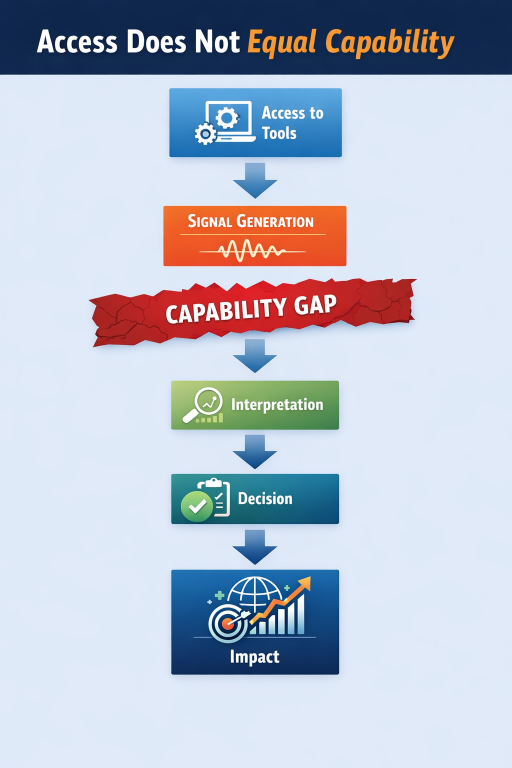
Fig. 1 Generated with ChatGPT version 5.3
-
Introduction: The Misunderstood Problem
In modern learning and professional environments, access to advanced tools has significantly improved. From AI platforms to analytical software, organizations and learners now operate in highly capable digital environments. This progress has led to a common assumption: if access is available, capability will follow.
The problem is not access, and it is not the signal. The problem is the interpretation of the signal.
-
Signal in Design of Experiments (DOE)
In Design of Experiments, a signal represents a real effect of a factor on a response. Modern tools are highly effective at identifying these signals through statistical testing, ANOVA, and model estimation.
In most cases, the signal is correctly identified.
Where Capability Is Required
Once a signal is detected, the challenge shifts to interpretation, understanding whether the signal is meaningful, practically significant, and applicable in real conditions.
The Risk: Misinterpretation of Signals
- Statistical vs practical confusion
- Ignoring interactions
- Context misalignment
- Overconfidence in outputs
Correct signals can lead to incorrect decisions if misinterpreted.
-
The Role of Access
Access to tools is essential. Without access, no analysis can be performed, and no applied learning can occur.
Access enables signal generation, not signal understanding.
Access to Software: A Structural Constraint on Capability
-
The Core Issue
Modern capability development depends on access to software and digital tools. Without access, capability cannot be developed.
-
The Structural Contradiction
Access to tools is often controlled through licensing, pricing models, and sales channels. This creates a contradiction: capability depends on access, but capability requirements do not govern access.
-
The Confrontation
A salesperson or commercial channel should not determine who can develop capability in a method that depends on access to a tool.
When access to essential tools is controlled outside the education system, capability formation becomes externally constrained.
-
Why This Matters?
When access is inconsistent or restricted, learning becomes fragmented and capability development uneven.
-
Enterprise Implication
If organizations do not control access to the tools required for learning, they do not fully control capability development.
-
Education System Implication
Teaching methods that depend on tools require guaranteed and sustained access to those tools.
-
Global Implication
Digital inclusion must include access to the specific tools required to build real capability.
-
Structured Principle
Access to software essential for capability must be treated as an educational requirement, not only a commercial transaction.
-
Conclusion
A single misinterpreted signal, embedded within flawed assumptions, can sustain an entire system of decisions that is statistically coherent yet fundamentally incorrect.
-
Final Reflections
Access enables signals. Education enables interpretation. Capability enables correct decisions. Verification enables trust.
Digital inclusion must evolve beyond connectivity and platform access.
It must ensure equitable and sustained access to the tools required to develop verifiable human capability.
Access opens the door to participation.
Education shapes understanding beyond entry.
Capability transforms knowledge into performance.
Verification anchors that performance in trust.
But when access is filtered through commercial interests, division is reinforced, and entire groups remain excluded from capability development.
The future of education is not defined by access alone, but by access aligned with equitable and verifiable capabilities.
An article blog written with ChatGPT version. 5.3 support April 13, 2026